Hot Tub Shade Failing? How to Choose the Best of 3 Types

Most hot tub owners find out their shade is not working the hard way. The water climbs past a comfortable temperature by early afternoon, the cover fades, the deck is too hot to stand on, and a gust of wind turns the new gazebo from a kit box into a very expensive kite. Choosing the right hot tub shade is not about style alone. It is about picking the structure that actually fits your spa, your yard, and your local weather, which is where most prefabricated kits fall short.
So which type of shade is best for a hot tub cover? Three structures dominate the conversation: a pergola, a gazebo, and a custom canopy or patio cover. This guide gives each one an honest verdict on sun coverage, wind, maintenance, and long term value, then shows you how to decide which one belongs over your spa.
Key Takeaways
- A pergola gives you architecture and filtered light, but open rafters alone leave gaps in sun protection unless you add fabric, a louvered roof, or a retractable panel.
- A gazebo covers the full footprint, but stock kits rarely match a spa deck and often leave the steps or equipment side exposed.
- A custom canopy or patio cover is sized to your spa and engineered for your site, which makes it the most flexible option for irregular layouts and windy locations.
- Van Nuys Awning has been designing and installing shade structures across Southern California since 1918.
The Short Answer: Which Hot Tub Shade Is Best?
There is no single winner for every yard, but there is a clear winner for each priority. Use this list as a quick filter before you read the details below.
- Best for full sun coverage: a custom canopy, a patio cover, or a gazebo with a solid roof, because all three block direct sun across the whole spa footprint.
- Best for style: a metal pergola, especially with a fabric layer or louvers added on top.
- Best for windy sites: a custom canopy or patio cover engineered for your specific location, since stock kits are not designed around local wind exposure.
- Best for a tight budget: a properly anchored shade sail on posts, which gives meaningful shade at a lower starting cost.
- Best overall for most homeowners: a custom canopy or patio cover, because it is sized to your spa, built for your site, and flexible about attachment.
That last verdict comes with an honest caveat. If your priority is architectural character and you are willing to add a shade layer, a pergola can win. If you want a freestanding, enclosed feeling away from the house, a custom gazebo can win. The sections below explain why.
Why Hot Tub Shade Matters More Than Comfort
Heat is the obvious reason to add hot tub shade. The Consumer Product Safety Commission states that hot tub water temperatures should never exceed 104 degrees Fahrenheit, and it notes that thermostats can be off by several degrees. A spa that sits in direct sun can gain heat from the sky as well as from the heater, so a shade structure takes pressure off a temperature you are trying to control.
Sun exposure also wears on spa covers, deck surfaces, and nearby furniture over a few seasons. Shade reduces that load and keeps the space usable at hours when full sun would otherwise drive you indoors.
Wind is the third factor, and in Los Angeles and Ventura County it deserves a serious look, especially on properties that sit in Santa Ana wind pathways. A structure over a spa has to handle sideways force as well as overhead weight, which is where stock kits and custom work diverge most. Keep that in mind as you read the verdicts below.
How Much Footprint Does a Spa Really Need?
Before comparing structures, measure the whole spa zone rather than the shell alone. Start with the tub itself, then add the entry steps, the equipment side that needs service access, and the walking room around the edges. Many six person spas run roughly seven to eight feet on a side, and the usable footprint ends up several feet larger once those extras are included.
Sketch the zone on the deck with chalk or tape, then stand in it at different times of day to see where shadows will actually fall.
Pergola Hot Tub Shade: Best for Style, Weaker on Coverage
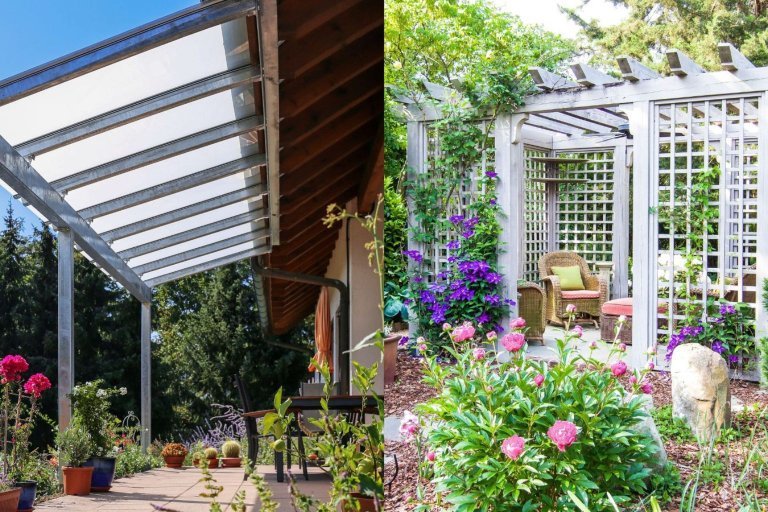
A pergola is the most popular choice for a spa, and for good reason. The open frame feels architectural, ties in easily with Spanish Colonial, Craftsman, and modern ranch homes, and defines the space without closing it in. The tradeoff is that open rafters filter sunlight instead of blocking it. On a hot, clear day, a bare pergola gives you dappled light rather than real relief.
Most homeowners who want a pergola for a spa end up adding a shade layer on top, such as a fabric panel, a tensioned sail, or a retractable canopy. That combination keeps the open look in cooler months and delivers shade when you need it. If you are weighing materials, our comparison of metal vs wood pergolas explains why powder-coated metal tends to outlast wood in coastal and high-sun conditions, and our post on whether pergolas actually provide shade goes deeper on rafter spacing and orientation.
To see how a tensioned sail pairs with a structure over an outdoor living area, take a look at our tension shade sail project in Rolling Hills. You can also browse our pergola designs for more configurations.
Gazebo Hot Tub Shade: Best for Full Cover, Limited by Size
A gazebo solves the coverage gap that pergolas leave. The roof covers the whole footprint, and the structure stands on its own instead of attaching to the house. For a spa that sits away from the home, that independence is a real advantage.
The sizing issue is where many kit purchases go wrong. Once you add steps, an equipment panel, and walking room, the shaded area you need is often larger than the roof of a stock gazebo, which can leave the entry side exposed.
Materials matter too. Wood gazebos in Southern California face strong sun and salt air near the coast, which can mean frequent refinishing. A custom gazebo built to your spa and your site avoids the sizing gap and lets you choose finishes that match the environment. For a closer look at the form, see our post on the difference between a gazebo and a pergola and our guide to building a hot tub gazebo.
Custom Canopy Hot Tub Shade: Best Overall Fit for Most Spas
A custom canopy or patio cover is designed around your spa rather than adapted to it. The dimensions, the attachment points, the roof pitch, and the fabric or metal are all chosen for your yard, your sun angles, and the way wind crosses your property. That precision is what kit retailers cannot offer, and it is the main reason this option fits irregular layouts so well.
When the spa sits next to the house, an attached patio cover can tie into the existing roofline and create a covered transition between indoor and outdoor space. See how that looks in practice in our closed end canopy project in Woodland Hills, and learn more about our patio covers. When the spa sits on a detached pad, a freestanding canopy or a tensioned sail system between posts can deliver coverage without a full enclosed structure. Our guide on choosing between an awning and a shade sail helps sort out those options.
Hot Tub Shade Scorecard: How the Three Types Compare
- Pergola: Partial shade on its own, with full coverage possible when you add fabric, louvers, or a retractable panel. Strong architectural presence, and durable when built from powder-coated metal.
- Prefabricated gazebo: Full roof coverage, but the footprint is fixed and often too small for the spa and its steps. Lower upfront price, with finish and maintenance needs that depend on the material.
- Custom gazebo: Full coverage sized to your spa, with materials chosen for sun, salt air, and wind. Higher upfront cost balanced by a better fit and longer service life.
- Custom canopy or patio cover: Coverage and attachment designed around your layout, with the widest choice of materials.
- Shade sail on posts: A lighter, more budget friendly way to shade an awkward area, though it needs strong, properly engineered anchor points.
The lowest price on day one usually carries the highest long term cost once maintenance and replacement are counted.
Permits, Wind, and Fabric: Three Checks Before You Build
Permits
Under the California Residential Code, one-story detached accessory structures of 120 square feet or less are commonly exempt from a building permit, but that exemption does not apply to every structure, and attached covers are treated differently. Local jurisdictions add their own rules, and a hot tub itself usually involves electrical work that is permitted separately. Check with your city or county building department before you build. See our overview on whether you need a permit for a patio cover.
Wind
Properties in the Simi Valley, Thousand Oaks, and San Fernando Valley corridors see strong Santa Ana winds, and any shade structure there needs to be designed for lateral loads. Our post on whether shade sails can withstand high winds covers how anchoring and engineering make the difference. If you are in Ventura County, you can also see our Ventura County service area.
Fabric and Frame
Steam, sun, and splashing are hard on materials. A powder-coated aluminum frame resists rust and warping, and solution dyed acrylic fabric holds color well in strong sun. Sunbrella, for example, explains that its fabrics are made of 100 percent solution dyed acrylic, with color added to the fiber before it is spun, and it lists a longer warranty period for shade and marine fabrics. Whatever fabric you choose, ask how the underside handles moisture from a heated spa, and ask how the fabric attaches so it can be removed or replaced without rebuilding the frame.
Matching the Structure to Your Yard
If the verdicts above did not settle it, work through these questions in order and the right answer usually appears quickly.
- Where does the spa sit? A spa near a wall favors an attached patio cover or canopy, while a detached pad favors a freestanding gazebo, pergola, or post-supported sail.
- How much sun does it get? A spa facing south or west in direct afternoon sun needs near full coverage, which points toward a solid roof, a fabric layer, or a retractable canopy.
- How windy is the site? Properties in open foothill areas need stronger engineering and anchoring than sheltered lots.
- How permanent should it be? Seasonal shade can be lighter, while a permanent structure should be planned with permits in mind. Design, permitting, and fabrication often take weeks before installation, so starting early helps.
For more layout ideas, see our guide to modern patio shade ideas.
Frequently Asked Questions
Which type of shade is best for a hot tub?
For most homeowners, a custom canopy or patio cover is the best fit because it can be sized to the spa, engineered for local wind, and attached or freestanding as needed. A metal pergola with a fabric or louvered roof is the best choice for style, and a custom gazebo is best when you want a freestanding, enclosed feeling.
Do I need a permit for hot tub shade in California?
Often yes, though it depends on the structure and your city or county. Small detached one-story accessory structures of 120 square feet or less are commonly exempt under the residential code, while attached covers and larger structures usually require a permit. A hot tub also involves electrical requirements, so confirm everything with your local building department.
What is the most durable material for hot tub shade?
A powder-coated aluminum frame paired with a solution dyed acrylic fabric is a durable combination for strong sun, because aluminum does not rust and the color is built into the fiber. Untreated wood and basic steel need more upkeep, especially near the coast.
Can a retractable canopy work over a hot tub?
Yes. A retractable or slide-on-wire canopy lets you shade the spa during hot afternoons and open the sky in cooler months. Ask about moisture resistance on the underside of the fabric, since steam from a heated spa can affect standard awning materials over time.
What affects the cost of hot tub shade?
Attachment type, square footage, frame material, fabric grade, and site conditions all move the price, and a site visit is the only way to get an accurate estimate.
Will a pergola give my hot tub enough shade?
Not by itself on a hot day, because open rafters filter sunlight rather than block it. Adding a fabric panel, shade sail, or retractable canopy across the top is the usual fix.
Get a Free Hot Tub Shade Consultation
The right structure depends on your property, your sun exposure, and your long term priorities, none of which a product grid can judge for you. Van Nuys Awning has been designing and installing custom shade solutions across Southern California since 1918. Call +1 818-782-8607 to speak with a shade specialist, or request a quote online and we will set up a complimentary on-site consultation.